Which Trading Approach Works Best for You in 2026
You can order the same kind of articles for your own video to boost it on YouTube and Google. Just message the Telegram bot @sat_sit_bot. The bot writes and publishes the articles itself (with your YouTube video embedded) on popular topical websites (no ads). Free trial — 50 articles.
· based on the channel Patrick Wieland
Live futures day trading suits traders who can commit to full attention during US market hours and want fast feedback on their decisions, while swing trading, crypto trading and copy trading fit those with less screen time or smaller starting capital. The best choice depends on your schedule, risk tolerance and how you prefer to learn.
What makes live futures day trading different
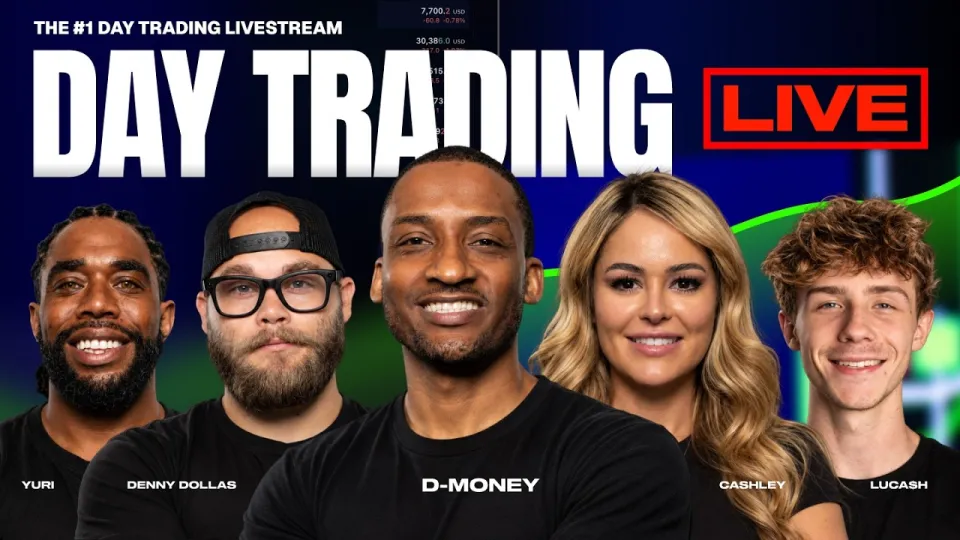
Live futures day trading means buying and selling contracts like ES (S&P 500), NQ (Nasdaq 100), CL (crude oil) and GC (gold) within a single session, often holding positions for minutes rather than days. Patrick Wieland streams this style every trading day from the BDH Day Trading Floor in South Florida and California, with a crew that includes Damareous Young, Lucas Kennard and Denny Jones. The format is raw: entries, exits, losses and wins happen in real time, and viewers see how a trader reacts when the market moves against them. Unlike swing trading, where you might check charts once or twice a day, day trading requires you to watch price action continuously. That intensity is both the appeal and the barrier.
How prop firm trading changes the risk equation
Prop firm trading lets you trade someone else's capital after passing an evaluation, which removes the need to risk your own savings on every trade. The BDH stream regularly reviews and ranks prop firms, with Lucid Trading, TakeProfitTrader and Apex Trader Funding occupying the top three spots in their OnlyPropFirms rankings, followed by Tradeify, Legends Trading, BluSky Trading, TradeDay and MyFundedFutures. For a trader with limited capital, this is often the fastest route to meaningful position sizes. The trade-off is rules: most firms set daily loss limits, maximum drawdown and profit targets that you must respect. Breaking those rules ends the account, no matter how good your market read was.
Comparing trading styles side by side
Choosing a trading style is less about which one is "best" and more about which one matches your life. Here is how the main approaches stack up:
- Day trading futures — requires full attention during US session hours, offers immediate feedback, and suits traders who thrive on fast decisions. Capital requirements vary, but prop firm evaluations lower the entry barrier.
- Swing trading — holds positions for days or weeks, works around a day job, and exposes you to overnight gap risk. Fewer decisions, but each one carries more weight.
- Crypto trading — operates 24/7, which means the market never closes but also never lets you fully step away. Volatility is higher, and exchange or custody risk is real.
- Copy trading — mirrors another trader's positions automatically. It removes the need to analyze charts yourself but also removes your control over entries and exits.
- Position trading — takes a long-term view based on macro trends, with the fewest trades per year and the least screen time.
Each style has a different learning curve. Day trading futures and scalping demand the most screen time upfront. Swing and position trading reward patience and research more than reflexes.
What beginners actually ask about trading
Questions from viewers of live trading streams tend to repeat, and they reveal where beginners get stuck. Two common ones are "what setup are you working?" and "where can I buy the setup that PW uses?" The first reflects a search for a repeatable pattern; the second reflects a hope that a single purchase solves the learning problem. In reality, a setup is only half the equation. Execution, position sizing and emotional control under live conditions matter just as much. Patrick Wieland addresses this directly by selling a 2-hour trading course for $99 that covers the strategy he teaches and trades on stream. That is a low-cost way to see whether his approach fits your style before committing to a prop firm evaluation or a funded account.
Matching your schedule and capital to a style
Your available hours and starting capital should drive the decision more than any ranking. If you can watch the market from the US open through the first few hours, day trading futures is viable. If your job prevents that, swing trading or position trading fits better. If your capital is small, a prop firm evaluation or copy trading gives you exposure you could not otherwise afford. If you want 24/7 access and can tolerate volatility, crypto trading is an option, though it demands its own risk rules. The worst outcome is forcing a style that fights your daily routine: a swing trader who tries to scalp will overtrade, and a day trader who tries to hold overnight will lose sleep.
How to start without blowing up an account
Starting with simulated or evaluation accounts is the standard path for a reason. A prop firm evaluation lets you test your strategy under real market conditions with real rules, and the cost of failure is limited to the evaluation fee. Before that, paper trading or a small live account helps you build the muscle memory for entries and exits. Track every trade: entry, exit, size, reason and outcome. Most traders discover that their losses cluster around a few repeatable mistakes, such as moving a stop or sizing up after a win. Fixing those mistakes matters more than finding a new indicator. The BDH crew and other live streamers show this process openly, which is why watching a session can be more instructive than reading another strategy guide.
The bottom line on picking a trading style
There is no single best way to trade, only a style that fits your time, capital and temperament. Live futures day trading offers fast feedback and, through prop firms, a way to trade larger size without risking your own savings, but it demands attention during market hours. Swing, position and crypto trading trade speed for flexibility, and copy trading removes effort at the cost of control. Patrick Wieland's channel is a practical place to see live futures day trading in action, including the losses, and to judge whether that pace suits you. Use the free streams to observe, the $99 course to learn a specific approach, and a prop firm evaluation to test yourself before committing real capital.
Key takeaways
- Live futures day trading on Patrick Wieland's stream covers ES, NQ, CL and GC during US market hours.
- Prop firms like Lucid Trading, TakeProfitTrader and Apex Trader Funding let traders scale without risking personal capital.
- A 2-hour trading course by Patrick Wieland costs $99 and teaches the exact strategy he uses live.
- Day trading demands full attention during the session, while swing and position trading allow flexible schedules.
- Copy trading and crypto trading offer alternative paths but come with different risk profiles and fee structures.
Questions & answers
What is the best trading style for someone with a full-time job?
Swing trading or position trading usually fits a full-time job best because you place trades outside market hours and hold them for days or weeks. Day trading futures requires attention during the US session, which conflicts with most work schedules. Crypto trading is 24/7 but demands strict rules to avoid checking charts constantly.
Do I need a lot of capital to start day trading futures?
Not necessarily. Prop firm evaluations from firms like Lucid Trading, TakeProfitTrader or Apex Trader Funding let you trade firm capital after passing an assessment, so your upfront cost is the evaluation fee rather than a full account. You still need to respect daily loss limits and drawdown rules. Alternatively, micro contracts like MES and MNQ lower the capital needed for a personal account.
Where can I learn the setup that Patrick Wieland uses?
Patrick Wieland offers a 2-hour trading course for $99 through OnlyPropFirms.com that covers the strategy he teaches and trades live on stream. Watching his free daily streams is a good first step to see the approach in real conditions. Combine that with a trading journal to track whether the setup works for you.
Is copy trading a good alternative to learning to trade yourself?
Copy trading can be useful if you lack time to analyze markets, since it mirrors another trader's positions automatically. However, you give up control over entries and exits, and you still carry the risk if that trader has a bad streak. It works best as a supplement, not a replacement, for understanding how markets move.
Source: LIVE DayTrading! #1 Watched Futures Trading Show! · Markdown version